


As you built your accounting practice over the years, you made careful decisions about cultivating client relationships and establishing a reputation for excellence in your community. CPA owners must exercise the same caution as they decide when to exit their practice.
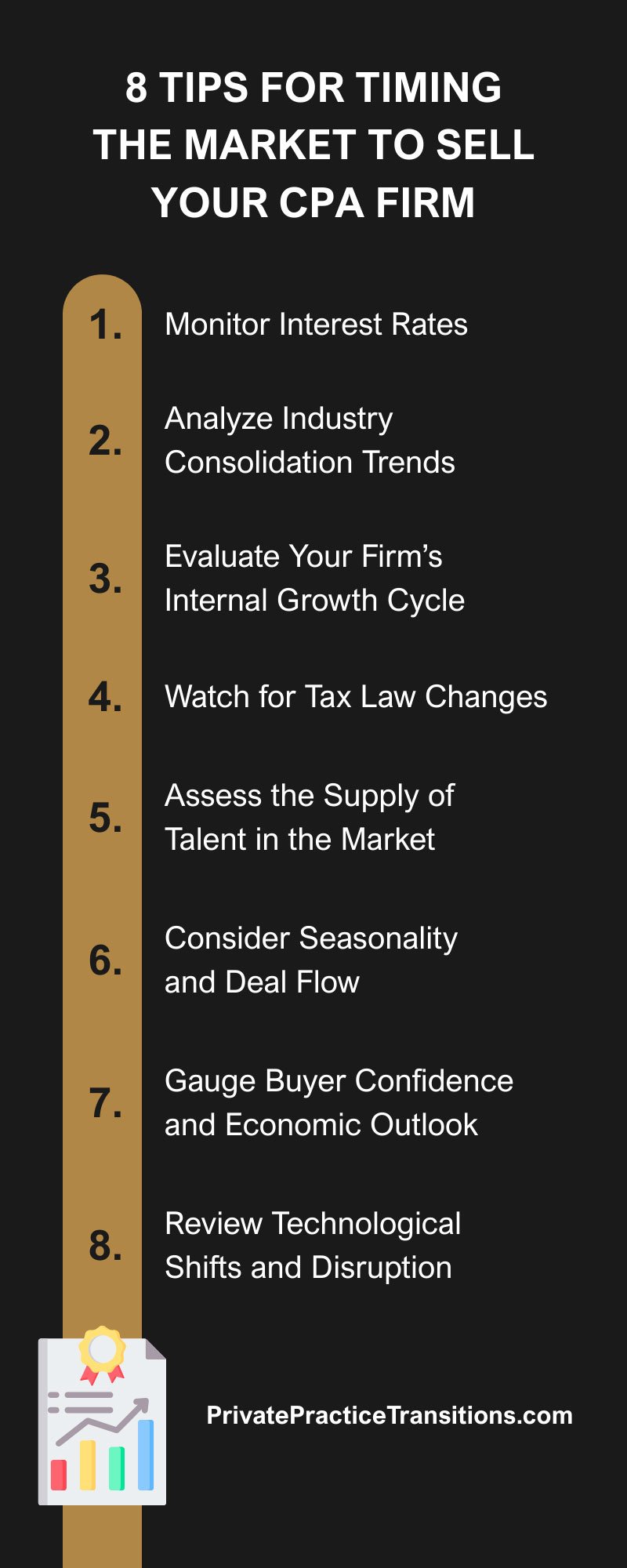
Understanding market dynamics can play a significant role in your final payout. These eight tips for timing the market to sell your CPA firm will help you strategically align your exit with conditions that maximize the return on your life’s work.
Monitor Interest Rates
Interest rates directly affect the buying power of potential acquirers considering your firm. When the Federal Reserve raises rates, the cost of borrowing increases, meaning buyers might have less capital available to offer for your business.
Lower interest rates generally stimulate the market because buyers can secure loans more affordably, allowing them to pay a higher multiple for your practice. You should keep a close eye on the lending landscape and consider listing your firm when capital is accessible and affordable. Buyers act more aggressively when they know they can service their acquisition debt comfortably without straining their cash flow.
Analyze Industry Consolidation Trends
The accounting industry frequently experiences waves of consolidation, in which larger firms aggressively acquire smaller practices to expand their footprint or service offerings. Recognizing these trends early puts you in a strong negotiating position, making you a sought-after commodity rather than just another seller.
If you notice regional firms or private equity groups actively acquiring practices in your area, demand is likely peaking. Selling during a consolidation wave often leads to bidding wars and higher multiples as buyers compete for market share. You want to ride this wave rather than wait until the major players have filled their acquisition quotas.
Evaluate Your Firm’s Internal Growth Cycle
Timing the market is not just about external economic factors but also about where your firm stands in its own lifecycle. Buyers pay a premium for firms that demonstrate a consistent upward trajectory in revenue and profitability over the last three to five years. Selling when your firm has plateaued or begun to decline can negatively impact its perceived value.
You should aim to list your business while it is still growing, as this signals future potential to buyers. A buyer wants to purchase a practice that is moving forward, not one that requires an immediate overhaul effort after closing.
Watch for Tax Law Changes
Another tip for timing the market to sell your CPA firm is to monitor tax law changes. Legislative changes can dramatically alter the net proceeds you retain after selling your business. Capital gains tax rates fluctuate based on political climates and new tax bills, making it essential for you to consult tax professionals about upcoming legislation.
Selling before a significant increase in capital gains tax can save you tens or even hundreds of thousands of dollars. Conversely, certain tax incentives for small-business sales might make waiting until a new tax year advantageous. You should treat tax implications as a central component of your timing strategy, not an afterthought.
Assess the Supply of Talent in the Market
People often tie the value of a CPA firm to its human capital, and a shortage of qualified accountants drives up the value of established firms with strong teams. When the labor market is tight and finding new staff is difficult, larger firms may acquire smaller ones to gain access to their talent.
This "acqui-hire" phenomenon means your staff retention creates immense value during periods of talent scarcity. You should leverage a tight labor market by highlighting your team’s stability and expertise. Selling when talent is at a premium can make your firm an irresistible target for buyers struggling to recruit organically.
Consider Seasonality and Deal Flow
The accounting profession revolves around strict deadlines and distinct busy seasons that influence deal timing. Listing your firm right before tax season could potentially scare away buyers who fear disrupting client service during the most critical time of the year.
The best time to go to market usually falls between May and October, allowing enough time for due diligence and a smooth transition before the next busy season begins. Buyers have more bandwidth to review financials and negotiate terms when they are not buried under tax returns. You can create a smoother transaction process by aligning your sales timeline with the natural rhythm of the industry.
Gauge Buyer Confidence and Economic Outlook
General economic sentiment plays a significant role in whether buyers feel comfortable taking on the risk of an acquisition. During periods of economic optimism, buyers feel confident about client retention and growth opportunities. Conversely, recession fears can cause buyers to tighten their budgets or demand more earn-out heavy structures to mitigate risk.
You should monitor economic indicators such as GDP growth and consumer confidence to gauge the market’s outlook. Striking while confidence is high ensures you encounter buyers who are motivated to close deals rather than hesitant to proceed.
Review Technological Shifts and Disruption
Technology continues to reshape the accounting landscape, from cloud-based solutions to artificial intelligence automation. If your firm utilizes modern technology and efficient workflows, you hold a competitive advantage that increases your value in the current market.
Buyers often prefer firms that have already modernized or that they can easily integrate into their existing systems. You must understand how your firm’s technology aligns with current market expectations to time your exit effectively.
Successfully selling your accounting practice requires a balance of external market awareness and internal preparation. By monitoring interest rates, industry trends, and your firm's growth trajectory, you can position yourself to capture maximum value for your hard work. Strategic planning drives better outcomes.
It also helps to have an experienced broker like Private Practice Transitions guide you through the process. Contact us today if you’re interested in listing your business for sale. We can help you refine your exit strategy and navigate the complexities of the sale, so you get a price that lets you enjoy the benefits of your hard work.