


When buying or selling an accounting or physical therapy practice, understanding how to determine the various components of the business’s value is essential. One of the most significant yet nuanced aspects of valuation is goodwill.
For buyers, it's an opportunity to acquire more than just physical assets; for sellers, it’s a chance to reflect on the legacy they’ve built. This blog dives into how to determine goodwill in a business acquisition.
Understanding Goodwill in a Business Context
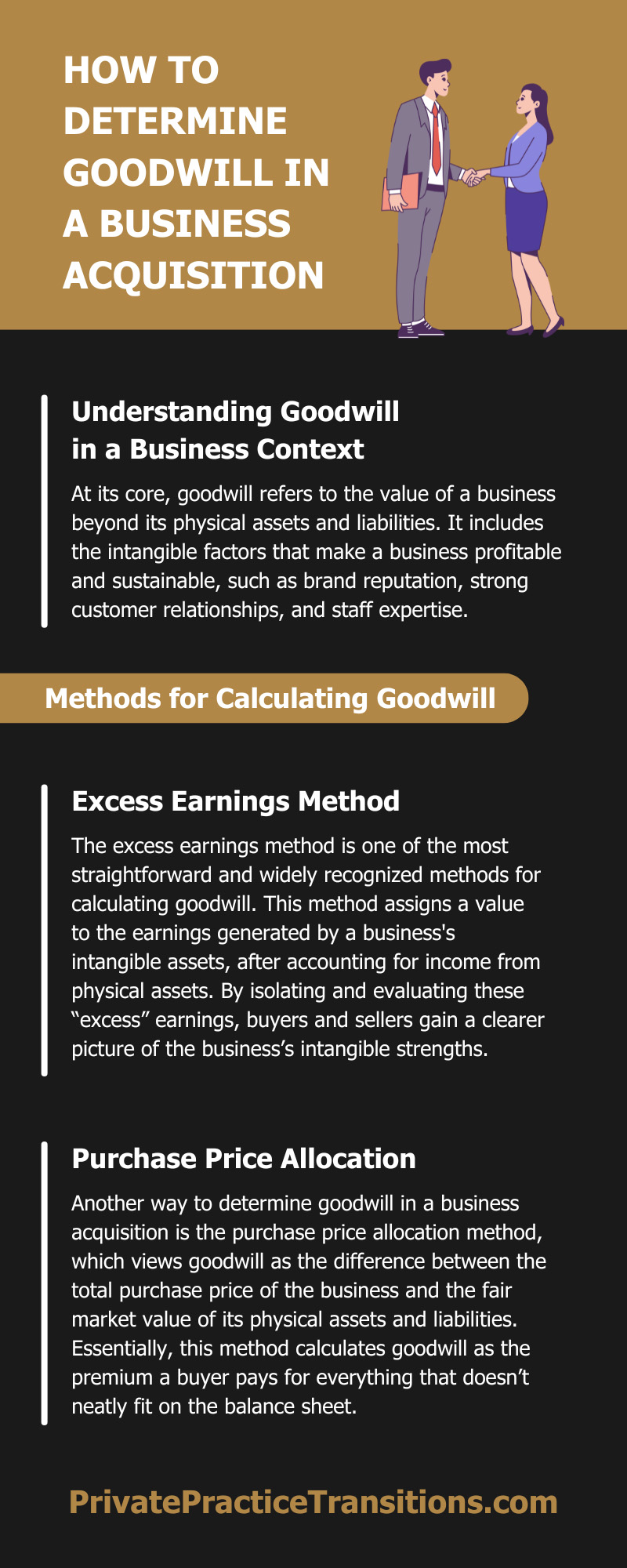
At its core, goodwill refers to the value of a business beyond its physical assets and liabilities. It includes the intangible factors that make a business profitable and sustainable, such as brand reputation, strong customer relationships, and staff expertise.
For example, consider an accounting practice with a decade-long history of high client retention rates. That legacy of loyalty and trust translates to measurable goodwill, giving the business a higher valuation than its tangible resources alone.
Another example is a physical therapy practice with a steady stream of referrals from local physicians. That pipeline, which might not appear on the balance sheet, is a clear example of the goodwill boosting a business's overall value.
From a buyer’s perspective, goodwill often reflects the acquired business's earning potential. On the other hand, sellers view goodwill as an acknowledgment of the time and effort invested in building their practice into a valuable enterprise.
Goodwill can also significantly increase the sale price of a practice. However, to accurately determine goodwill, buyers and sellers need to approach valuation with a clear methodology and rely on supporting evidence.
Methods for Calculating Goodwill
Accurately calculating goodwill is essential for ensuring both buyers and sellers reach a fair agreement. Different methods offer distinct ways to measure this intangible value, with each focusing on specific elements of the transaction.
Excess Earnings Method
The excess earnings method is one of the most straightforward and widely recognized methods for calculating goodwill. This method assigns a value to the earnings generated by a business's intangible assets, after accounting for income from physical assets. By isolating and evaluating these “excess” earnings, buyers and sellers gain a clearer picture of the business’s intangible strengths.
This approach is particularly advantageous because it creates a detailed breakdown of what drives profitability beyond tangible resources. Buyers can quickly understand which unique elements, like efficient operations or a strong reputation, contribute to the overall value. On the flip side, sellers benefit by presenting an objective calculation that showcases the worth of their intangible assets, helping them substantiate their asking price.
Purchase Price Allocation
Another way to determine goodwill in a business acquisition is the purchase price allocation method, which views goodwill as the difference between the total purchase price of the business and the fair market value of its physical assets and liabilities. Essentially, this method calculates goodwill as the premium a buyer pays for everything that doesn’t neatly fit on the balance sheet.
One of the key benefits of this method is its simplicity and directness, which makes it particularly attractive in larger transactions. It provides both parties with a clean and easy-to-understand framework for identifying hidden value.
Buyers gain confidence knowing they are paying an appropriate premium for the established relationships, loyal customers, or proprietary systems that elevate the business. Sellers can also leverage this method to clearly articulate the specific factors that justify their valuation, thereby strengthening their ability to negotiate effectively. By using either of these methods, buyers and sellers can approach goodwill valuation with a level of precision that not only streamlines negotiations but ensures fair deals for both sides.
Challenges in Valuing Goodwill
Although goodwill can add significant value to a transaction, assessing it is often complex. One reason is that many aspects of goodwill are subjective and difficult to quantify. How do you determine the exact dollar value of client loyalty or staff expertise? Ambiguity around valuation can lead to disagreements between buyers and sellers, adding friction to the transaction.
Additionally, intangible elements like reputation can be volatile, meaning what’s true today might not hold in the future. A bad online review or changes in ownership that disrupt client relationships can diminish goodwill overnight.
Tips for Buyers and Sellers
Because valuing goodwill can be one of the trickiest aspects of buying or selling a business, here are some tips that will help both buyers and sellers overcome this challenge. Gaining a clear understanding of how to approach these complexities can lead to smoother transactions and better outcomes for everyone involved.
Leveraging Professional Expertise
Most buyers and sellers benefit from engaging professionals who specialize in business transitions. Certified business brokers bring years of industry-specific experience in fields like physical therapy and accounting. They can not only calculate goodwill accurately but also negotiate deals that reflect the true value of the business.
Verify the Accuracy of Records
Ensuring the accuracy of a seller’s financial records is a critical step for buyers in evaluating goodwill. Each document, from balance sheets to profit and loss statements, provides essential clues about the intangible value of a business. Reviewing trends, customer contracts, and client retention rates can highlight patterns that directly influence goodwill.
For added assurance, it’s worth seeking help from a financial professional to cross-verify the numbers. They can spot inconsistencies or areas that require deeper review, ensuring you don’t overestimate the business’s overall value. Diligence in this stage of the process helps buyers approach negotiations from a position of informed confidence.
Be Transparent With Buyers
For sellers, presenting goodwill as a tangible, credible asset requires preparation and complete transparency. This might include showcasing annual retention rates, sharing testimonials, or presenting surveys that illustrate customer satisfaction.
Documenting these factors and organizing them clearly can make a substantial difference in how buyers perceive your business's overall value. Additionally, addressing potential concerns upfront, such as an unusual dip in revenue, can help build trust throughout the negotiation. The more open and prepared you are as a seller, the more confidence buyers will have in the value you’ve assigned to your goodwill.
Accurately determining goodwill in a business acquisition is key to ensuring a fair, successful deal. Buyers need confidence that they’re paying for both tangible assets and the intangible value that will sustain revenue. Meanwhile, sellers must highlight every aspect of their business that contributes to its long-term profitability.
If you're looking to buy or sell an accounting or physical therapy practice, working with Private Practice Transitions’ certified business brokers can be your key to success. With industry-specific expertise and a client-focused approach, we can help you uncover the true value of the practice’s goodwill and negotiate with confidence. Reach out to us today and take the first step toward achieving your business goals.